
Refinery wastewater contains a complex pollutant load (hydrocarbons, phenols, heavy metals, sulfides) that requires advanced treatment before discharge. This study evaluates the effectiveness of a treatment system by analyzing physicochemical and bacteriological parameters based on the Water Quality Index (WQI) and the Inorganic Pollution Index (IPO). The methodology employed allowed for 61 days of monitoring at four treatment plant stations. The parameters analyzed included COD, TSS, hydrocarbons, volatile phenols, sulfides, ammonia nitrogen, heavy metals (Pb, As, Cr), and pH. The methods used combined UV spectrophotometry, ICP, and colorimetric tests. The primary treatment reduced COD by 85% and hydrocarbons by 92%. Secondary treatment maintained residual COD at 45.2 mg/L and phenols at 0.15 mg/L. At the outlet, regulatory compliance exceeded 95% for all parameters, with removal rates of 93% (COD), 98.8% (hydrocarbons), and 99.4% (phenols). The IPO and IQE indices confirmed a significant improvement in water quality after treatment. The performance demonstrates the effectiveness of a combined physicochemical and biological approach. Some variations in inlet pH and sulfide levels indicate the need for appropriate pretreatment. The use of the IQE/IPO indices facilitates environmental monitoring and decision-making. The treatment system studied is effective in meeting petroleum wastewater discharge standards. Targeted optimizations, particularly regarding pH regulation and sulfide monitoring, could further improve its performance. This study provides a methodological framework applicable in similar contexts, particularly in the Sahel region.
| Published in | Modern Chemistry (Volume 14, Issue 1) |
| DOI | 10.11648/j.mc.20261401.12 |
| Page(s) | 9-21 |
| Creative Commons |
This is an Open Access article, distributed under the terms of the Creative Commons Attribution 4.0 International License (http://creativecommons.org/licenses/by/4.0/), which permits unrestricted use, distribution and reproduction in any medium or format, provided the original work is properly cited. |
| Copyright |
Copyright © The Author(s), 2026. Published by Science Publishing Group |
Petroleum Wastewater, Water Quality Index, Inorganic Pollution Index, Physicochemical Treatment, Heavy Metals
Nitrogen Ammonia N2-NH4) | Materials needed: Graduated cylinder; Erlenmeyer flask; 10 ml glass cuvette; Micropipette; DR-2800 UV spectrophotometer. Reagents: Tartaric acid; NaOH; Zinc sulfate; Nessler's reagent. |
Phosphate | Materials needed: 50 mL tubes; DR 2800 UV spectrophotometer; 13 mL cuvette; Micropipette. Reagents: Ammonium persulfate; Ammonium molybdate; Ascorbic acid |
Toxic Substances Phenol | Materials needed: 50 mL tubes; DR 2800 UV spectrophotometer; 30 mL square cuvette; Micropipette. Reagents: Buffer reagent; 4-amino anti; Ferric potassium. |
Sulphite ions | Materials needed: Erlenmeyer flask with stopper; Graduated cylinder; Graduated burette (for titration). Reagents: NaOH; Zinc acetate; Iodine; Hydrogen chloride (HCl); Sodium thiosulfate (titrant); Starch. |
Oil content | Materials needed: Beaker; Graduated cylinder; Filter; Bubbling apparatus assembly; Laminar flow hood; Computer and main server; Reading cuvette; Carbon tetrachloride; Sodium sulfate anhydride. |
Lead | Materials needed: DR 6000 spectrophotometer; graduated cylinder; 250 ml beaker; Fast Column Extractor; stand; cotton swab; piston; measuring cuvette Reagents Lead 1 reagent (preservative acid); Lead 2 reagent with fixative solution; 25 ml of Lead-3 solution; Lead-4 solution; Lead-5 solution; Lead-6 solution; distilled water |
Total Chrome | Materials needed: DR 6000 spectrophotometer; test tube; warm bath Reagents 25 ml sample water; Chromium 1 reagent sachet Chromium 2 reagent sachet; Chromaver 3 reagent sachet; cold water Control sample water |
Arsenic | Materials needed: A bottle; filter slide; stopper; black slide (Palintest color chart); filter paper; DigiPAsS Reagent: reagent sachet A1; tablet A2; deionized water |
EQI | Water Quality Index |
IPO | Inorganic Pollution Index |
| [1] | REJSEK, F. (2002). Water Analysis: Regulatory and Technical Aspects. Science and Technology. Scéren (CRDP Aquitaine). Technical Biology Collection. Environmental Science and Technology, 360 pages. |
| [2] | Nuamah, D. O. B. (2017). Heavy Metal Source Identification and Analysis Using Multivariate Statistical Methods in Soils from Akuse Area, South-Eastern Ghana. 5(8). |
| [3] | Sun, L. H. (2012). Statistical Analysis of Heavy Metals in Bottom Sediments from the Tuo River in Suzhou City, China and its Implications for Source Identification. Advanced Materials Research, 1621–1624. |
| [4] | Adannou, H. A., Ibrahim, M. A., Goni, S., Hassane, A. I., KAMANE, N. K., Ali, A. M., & III, S. N. (2021). Influence of Solar Radiation on Questionable Gasolines Sold in N’Djamena: ASTM D86 Distillation Analysis and Standardized Tests Related to Atmospheric Pollution and Corrosion. American Journal of Environmental Protection, 9(1), 1-12. |
| [5] | Zerari, N. (2020). Bibliographic synthesis of heavy metals and their trapping by adsorption on clays. Master's thesis in Hydraulics, pp. 1–66. Mohamed Khider University -Biskra-. |
| [6] | Haroun Ali Adannou, Ntamack Samuel, Ndiassé FALL, Mahamat Annour Béchir and Simon Ngos III (B): (2024) State of atmospheric pollution between vulnerabilities and criticalities from 2007 to 2022 and a projection in 2030 focused on the proliferation of gasoline sales in the city of N'Djamena |
| [7] | Haroun Ali Adannou, Podo Mahamat Matar, Tchang Banda Constantin, Achta Hamid Saleh, Simon Ngos III (A): (2024) Evaluation and Determination of the Physical Properties of Gasoline and the Presence of Fine Particles in the Ten Districts of the City of N'djamena: American Journal of Environmental Protection 2024, Vol. 13, No. 5, pp. 122-137 |
| [8] | Tchadanaye New Mahamat, Noumi Guy Bertrand, Paloumi Yabe. Pollution of the Chari River in the Slaughterhouse Farcha (N'djamena) in Chad. American Journal of Environmental Protection. Vol. 5, No. 1, 2016, pp. 11-19. |
| [9] | Kwon, M. J., Lee, J. Y., Lee, J. Y., Hwang, Y. H., Jeon, S. kyung, Jeon, S. kyung, Yang, J.-S., Yun, S. T., Lee, S., & Lee, S. (2017). Spatial distribution, mineralogy, and weathering of heavy metals in soils along zinc-concentrate ground transportation routes: implication for assessing heavy metal sources. Environmental Earth Sciences, 76(23), 802. |
| [10] | Boukary Sawadogo (2018). Treatment of industrial wastewater by membrane processes under a Sahelian climate: the case of brewery wastewater in Burkina Faso. Doctoral thesis. University of Montpellier (UM). |
| [11] | Bartolini, M. G., & Muckel, S. (2022). Pollution, Ecological Risk and Source Identification of Heavy Metals in Sediments from the Huafei River in the Eastern Suburbs of Kaifeng, China. International Journal of Environmental Research and Public Health, 19(18), 11259. |
| [12] | Zhou, J., Ma, D., Pan, J., Nie, W., & Wu, K. (2008). Application of multivariate statistical approach to identify heavy metal sources in sediment and waters: a case study in Yangzhong, China. Environmental Earth Sciences, 54(2), 373–380. |
| [13] | JAMES C. W., MATTHEW S., ROBERT P. G., BARBARA S. S. Toxic chemicals and trace metals from urban and rural Louisiana lakes: recent historical profiles ans toxicological significance. Environment science technology, 1995, 29, 8: 1436-1445. |
| [14] | AURELIE D. Characterization of the risks induced by agricultural activities on aquatic ecosystems. Doctoral thesis. ENGREF of Montpellier, 2004, 239p. |
| [15] | BINNING K and BAIRD D Survey of heavy metals in the sediments of the Swartkops River Estuary, Port Elizabeth, South Africa. Water SA, 2001, 27(4): 461-466. |
| [16] | Zhao, Y., Zhao, S., Shi, X., Lu, J., Cui, Z., Yu, H.,... & Li, X. (2024). Influence of environmental factors on changes in the speciation of Pb and Cr in sediments of Wuliangsuhai Lake, during the ice-covered period. Environmental Geochemistry and Health, 46(4), 116. |
| [17] | Omar, Y. (2015). Bioaccumulation of some heavy metals (Pb, Zn and Cu) of road origin by means of a moss (Bryum argenteum Hedw) in the city of Tiaret (Algeria): pollution classes and mapping. Doctoral thesis in environmental science, pp. 1-168. Djillali Liabes University of Sidi Bel Abbes. |
| [18] | Chahid, A. (2016). Quantification of trace metals (cadmium, lead, and total mercury) in certain fishery products landed in the Essaouira-Dakhla area: Health risk assessment, pp. 1–191. |
| [19] | Neggaz, F. (2020). Chromium adsorption by a hydroxyapatite based on the test of the sea urchin Paracentrotus lividus (Lamarck 1816). Master's thesis in Marine and Continental Hydrobiology, pp. 1–99. Abdelhamid Ibn Badis University - Mos-taganem -. |
| [20] | Haroun Ali Adannou., Kamane, N. K., Prosper, S. K., Ngarbaroum, D., Constant, A. N., Ali, A.-H. M. and Ngos III, S. (2020). The Environmental Impact of Polycyclic Aromatic Hydrocarbons: Mechanism of Extraction by Bio-Surfactant in a Microwave. Natural Resources, 11, 576-589. |
| [21] | Li, H., Shi, A., Li, M., & Zhang, X. (2013). Effect of pH, temperature, dissolved oxygen, and flow rate of overlying water on heavy metals release from storm sewer sediments. Journal of Chemistry, p. 5. |
| [22] | Salah, E. A. M., Turki, A. M., & Mahal, S. N. (2015). Chemometric evaluation of the heavy metals in urban soil of Fallujah city, Iraq. Journal of Environmental Protection, 6(11), 1279–1292. |
| [23] | Simou, A., Mrabet, A., Abdelfattah, B., Bougrine, O., Khaddor, M., & Allali, N. (2024). Distribution, Ecological, and Health Risk Assessment of Heavy Metals in the Surface Seawater Along the Littoral of Tangier Bay (Southwestern Mediterranean Sea). |
| [24] | Tiabou, A. F., Takem-Agbor, A. A., Yiika, L. P., Mengu, E. E., Kachoueiyan, F., & Agyingi, C. M. (2024). Distribution, source apportionment and ecological risk assessment of heavy metals in Limbe River sediments, Atlantic Coast, Cameroon Volcanic Line. Discover Water, 4(1). |
| [25] | Berramdane Rania and Brahmi Sanae.(2024) Interaction between pH, temperature and heavy metals in wastewater from the city of Biskra (Chaâbet Roba). |
APA Style
Adannou, H. A., Ahmat, S. F., Mahamat, H. S., Mahamat, A. A., Mohagir, A. M. (2026). Physico-chemical and Bacteriological Evaluation, Based on the Water Quality Index (AQI) and the Inorganic Pollution Index (IPO) of Wastewater from an Oil Refinery. Modern Chemistry, 14(1), 9-21. https://doi.org/10.11648/j.mc.20261401.12
ACS Style
Adannou, H. A.; Ahmat, S. F.; Mahamat, H. S.; Mahamat, A. A.; Mohagir, A. M. Physico-chemical and Bacteriological Evaluation, Based on the Water Quality Index (AQI) and the Inorganic Pollution Index (IPO) of Wastewater from an Oil Refinery. Mod. Chem. 2026, 14(1), 9-21. doi: 10.11648/j.mc.20261401.12
AMA Style
Adannou HA, Ahmat SF, Mahamat HS, Mahamat AA, Mohagir AM. Physico-chemical and Bacteriological Evaluation, Based on the Water Quality Index (AQI) and the Inorganic Pollution Index (IPO) of Wastewater from an Oil Refinery. Mod Chem. 2026;14(1):9-21. doi: 10.11648/j.mc.20261401.12
@article{10.11648/j.mc.20261401.12,
  author = {Haroun Ali Adannou and Salwa Fadoul Ahmat and Hassan Souleymane Mahamat and Aboubakar Ali Mahamat and Ahmed Mohammed Mohagir},
  title = {Physico-chemical and Bacteriological Evaluation, Based on the Water Quality Index (AQI) and the Inorganic Pollution Index (IPO) of Wastewater from an Oil Refinery},
  journal = {Modern Chemistry},
  volume = {14},
  number = {1},
  pages = {9-21},
  doi = {10.11648/j.mc.20261401.12},
  url = {https://doi.org/10.11648/j.mc.20261401.12},
  eprint = {https://article.sciencepublishinggroup.com/pdf/10.11648.j.mc.20261401.12},
  abstract = {Refinery wastewater contains a complex pollutant load (hydrocarbons, phenols, heavy metals, sulfides) that requires advanced treatment before discharge. This study evaluates the effectiveness of a treatment system by analyzing physicochemical and bacteriological parameters based on the Water Quality Index (WQI) and the Inorganic Pollution Index (IPO). The methodology employed allowed for 61 days of monitoring at four treatment plant stations. The parameters analyzed included COD, TSS, hydrocarbons, volatile phenols, sulfides, ammonia nitrogen, heavy metals (Pb, As, Cr), and pH. The methods used combined UV spectrophotometry, ICP, and colorimetric tests. The primary treatment reduced COD by 85% and hydrocarbons by 92%. Secondary treatment maintained residual COD at 45.2 mg/L and phenols at 0.15 mg/L. At the outlet, regulatory compliance exceeded 95% for all parameters, with removal rates of 93% (COD), 98.8% (hydrocarbons), and 99.4% (phenols). The IPO and IQE indices confirmed a significant improvement in water quality after treatment. The performance demonstrates the effectiveness of a combined physicochemical and biological approach. Some variations in inlet pH and sulfide levels indicate the need for appropriate pretreatment. The use of the IQE/IPO indices facilitates environmental monitoring and decision-making. The treatment system studied is effective in meeting petroleum wastewater discharge standards. Targeted optimizations, particularly regarding pH regulation and sulfide monitoring, could further improve its performance. This study provides a methodological framework applicable in similar contexts, particularly in the Sahel region.},
 year = {2026}
}
TY  - JOUR
T1  - Physico-chemical and Bacteriological Evaluation, Based on the Water Quality Index (AQI) and the Inorganic Pollution Index (IPO) of Wastewater from an Oil Refinery
AU  - Haroun Ali Adannou
AU  - Salwa Fadoul Ahmat
AU  - Hassan Souleymane Mahamat
AU  - Aboubakar Ali Mahamat
AU  - Ahmed Mohammed Mohagir
Y1  - 2026/01/27
PY  - 2026
N1  - https://doi.org/10.11648/j.mc.20261401.12
DO  - 10.11648/j.mc.20261401.12
T2  - Modern Chemistry
JF  - Modern Chemistry
JO  - Modern Chemistry
SP  - 9
EP  - 21
PB  - Science Publishing Group
SN  - 2329-180X
UR  - https://doi.org/10.11648/j.mc.20261401.12
AB  - Refinery wastewater contains a complex pollutant load (hydrocarbons, phenols, heavy metals, sulfides) that requires advanced treatment before discharge. This study evaluates the effectiveness of a treatment system by analyzing physicochemical and bacteriological parameters based on the Water Quality Index (WQI) and the Inorganic Pollution Index (IPO). The methodology employed allowed for 61 days of monitoring at four treatment plant stations. The parameters analyzed included COD, TSS, hydrocarbons, volatile phenols, sulfides, ammonia nitrogen, heavy metals (Pb, As, Cr), and pH. The methods used combined UV spectrophotometry, ICP, and colorimetric tests. The primary treatment reduced COD by 85% and hydrocarbons by 92%. Secondary treatment maintained residual COD at 45.2 mg/L and phenols at 0.15 mg/L. At the outlet, regulatory compliance exceeded 95% for all parameters, with removal rates of 93% (COD), 98.8% (hydrocarbons), and 99.4% (phenols). The IPO and IQE indices confirmed a significant improvement in water quality after treatment. The performance demonstrates the effectiveness of a combined physicochemical and biological approach. Some variations in inlet pH and sulfide levels indicate the need for appropriate pretreatment. The use of the IQE/IPO indices facilitates environmental monitoring and decision-making. The treatment system studied is effective in meeting petroleum wastewater discharge standards. Targeted optimizations, particularly regarding pH regulation and sulfide monitoring, could further improve its performance. This study provides a methodological framework applicable in similar contexts, particularly in the Sahel region.
VL  - 14
IS  - 1
ER  -
Department of Physics and Chemistry, Higher Teacher Training College of N'djamena, N'djamena, Chad;African Laboratory for Sustainable Development Research, N'djamena, Chad
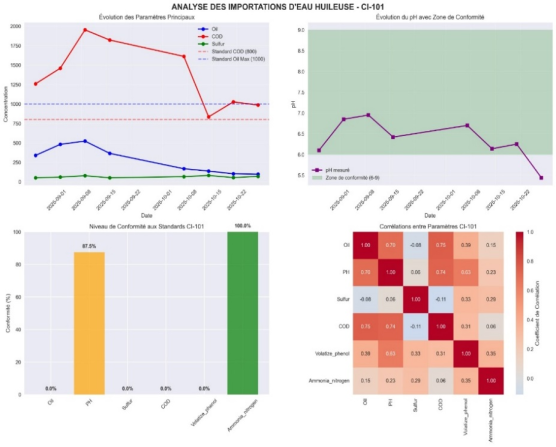
Figure 1. Response of the grouped results of the analysis of station C1-101
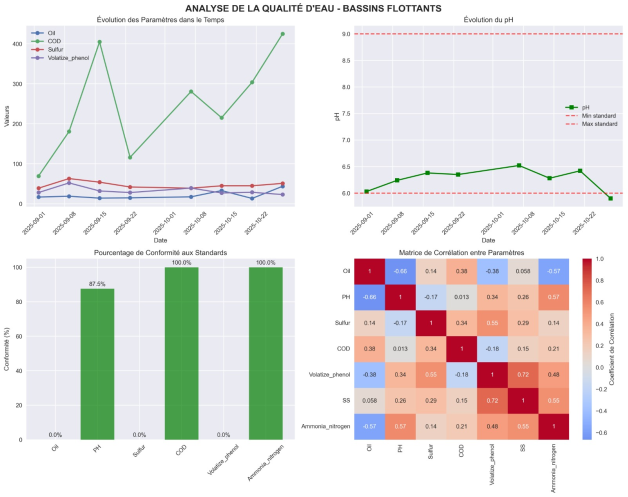
Figure 2. Analysis of the water quality of the floating basin.
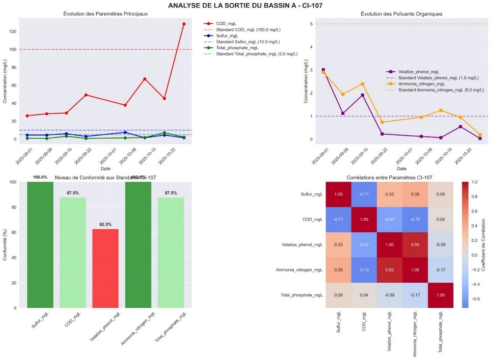
Figure 3. Grouping of results on treatment performance related to the analysis of the outlet of basin A-C1-107.
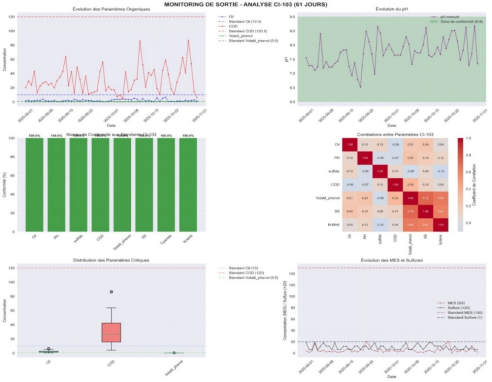
Figure 4. Analysis results relating to compliance with standards.
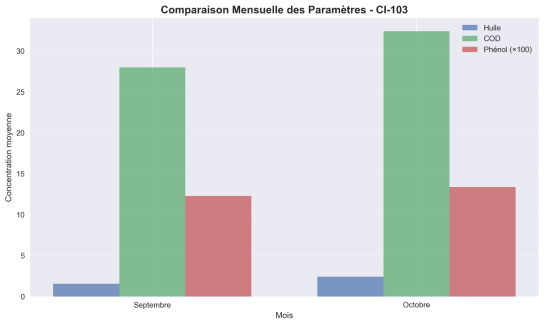
Figure 5. Monthly comparison of C1-103 parameters.
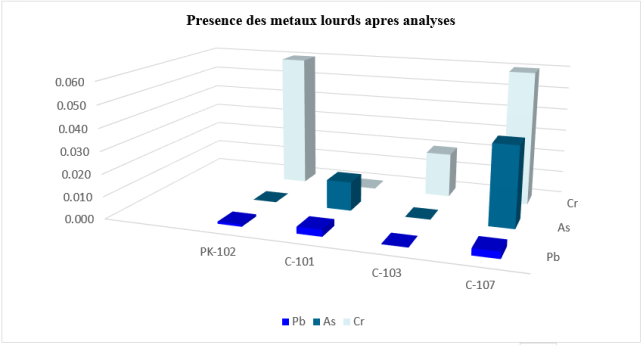
Figure 6. Presence of heavy metals after wastewater analysis.
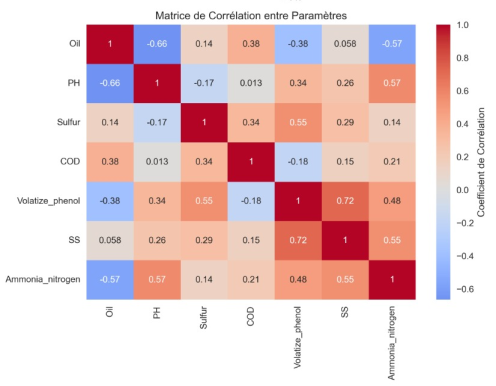
Figure 7. Correlation matrix between parameters.




 Share This Article
 Twitter
 Linked In
 Facebook
 Copy
Copy Download